
Gonggu (공구): How Koreans Buy Products Together and Save Big
In This Article
What Is Gonggu
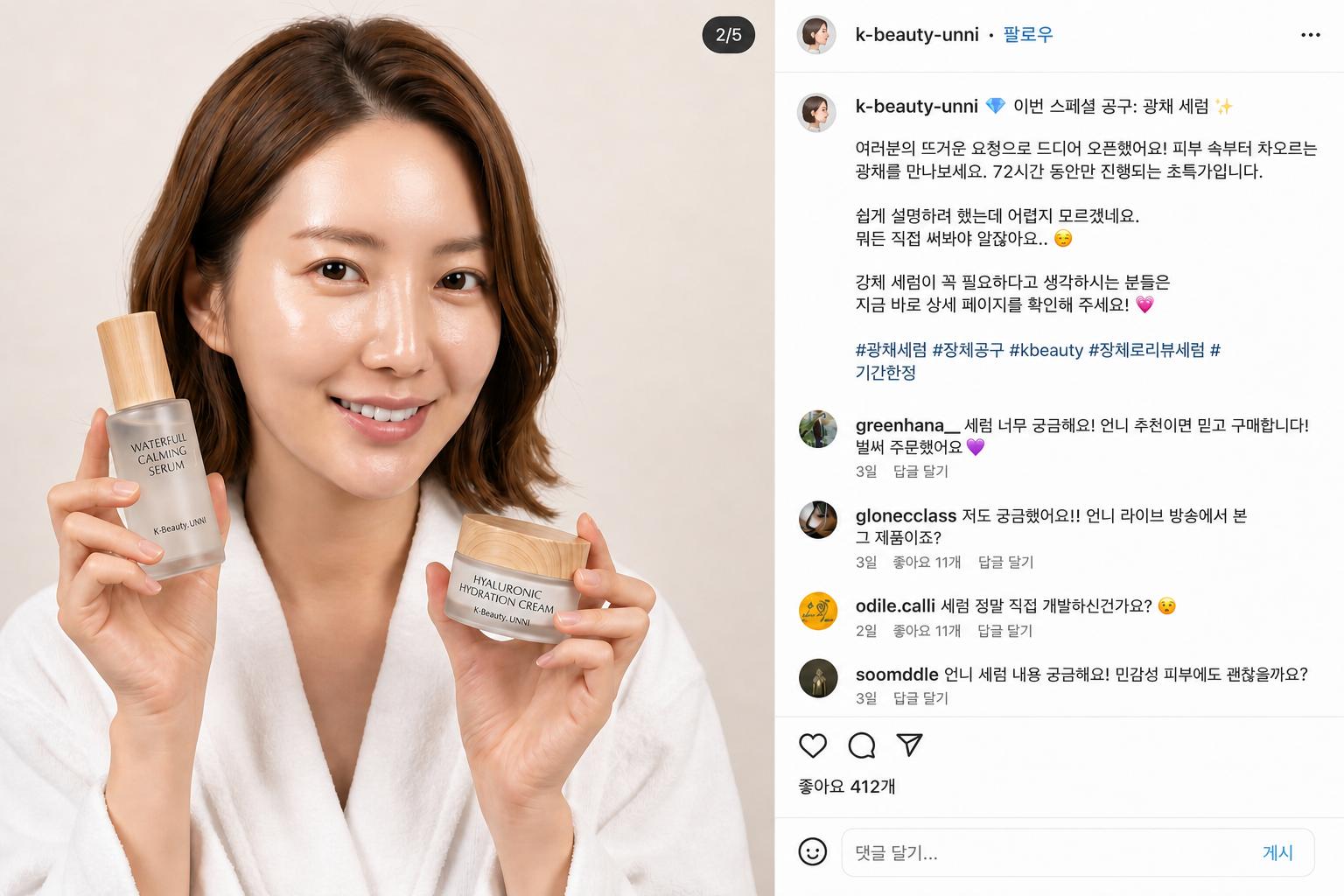
Imagine someone you follow on Instagram posts about a skincare product they have been using for a month. They love it. They have negotiated a bulk discount directly with the supplier. If enough people buy together, everyone gets it at roughly half the retail price. A KakaoTalk chat room opens. Within 48 hours, hundreds of people have placed their orders. No brand campaign. No advertising budget. Just one trusted person and a community that showed up. This is Gonggu (공구) — short for Gongdong-gumae (공동구매), meaning group purchase — and it is one of the most distinctly Korean things happening in e-commerce right now.
Instagram Is Where It Starts. KakaoTalk Is Where It Gets Done.
Understanding how Gonggu works requires looking at two platforms together. Instagram is the entrance. A seller, influencer, or trusted community figure announces a Gonggu on their feed or story. They share photos, explain why they personally recommend the product, and post instructions for how to join. The visual format of Instagram makes it ideal for building initial interest and trust. But Instagram alone cannot handle the logistics of a group purchase. Once interest is established, the operation moves to KakaoTalk. An open chat room is created where buyers confirm their orders, coordinate payment, and receive shipping updates. Post-purchase reviews often circulate in the same room.
KakaoTalk's 93 percent penetration rate across the Korean population means the infrastructure for this second step is already in place for almost everyone.
Why a Stranger's Recommendation Works Better Than a Brand's
Korean consumer behavior research consistently shows that Koreans weight peer recommendations significantly more heavily than advertising when making purchase decisions. This reflects a deeply collectivist culture in which the group's endorsement carries more authority than any individual brand claim. A Gonggu organizer is not a store. They are a person whose daily life their followers have watched, whose taste they trust, and whose recommendation arrives with an implicit message: I already tried this, and I am only sharing it because it is worth sharing. That framing is more powerful than any advertising campaign, and Korean consumers respond to it accordingly.
Getting a Better Deal Is a Point of Pride
There is also a cultural dimension to smart consumption in Korea that makes Gonggu feel like more than just a discount. Paying full retail price when a group discount was available is seen as a small failure of awareness. Knowing where to find the best deal, and sharing that knowledge with others, functions as social currency. Participating in a Gonggu signals that you are connected to the right people and informed enough to act before the window closes. The savings matter, but what participating says about you matters just as much.
The Rest of the World Is Starting to Pay Attention
The idea behind Gonggu is not limited to Korea anymore. Similar forms of group buying and social commerce have already taken off in other markets, especially in China through platforms like Pinduoduo. In the United States and other regions, influencer-led shopping and community-based purchasing are also growing quickly. What makes Gonggu different is how naturally it developed in Korea through platforms like Instagram and KakaoTalk, powered by everyday trust between people rather than formal systems. As global brands and platforms look for new ways to drive conversion through community, the Gonggu model is increasingly being studied as a potential blueprint.
What Gonggu Looks Like in Practice
A typical Gonggu starts with an Instagram post. Someone with a following announces that they have found or negotiated access to a product at a better price if enough people buy together. They share photos, explain their personal recommendation, and direct followers to a KakaoTalk open chat room. Buyers join, confirm orders, and wait for updates. The organizer handles the bulk purchase and coordinates delivery. The entire process can move from announcement to close in 24 to 48 hours. Products range from skincare to food to household goods to clothing. Some organizers run Gonggu occasionally as a side activity. Others have built full businesses around it. Either way, the structure is the same: one trusted person, a community that follows them, and a deal that only works if everyone shows up.