
In Korea, You Can Eat, Shop, and Check In to a Hotel Without Talking to Anyone
In This Article
You land in Korea, check into your hotel at a kiosk, grab coffee from a machine, order lunch by tapping a screen, and buy groceries at a register with no cashier. Nobody spoke to you. Nobody needed to. This is not a future concept. This is just a regular Tuesday in Korea.
Kiosks Are Everywhere, and They Are Fast
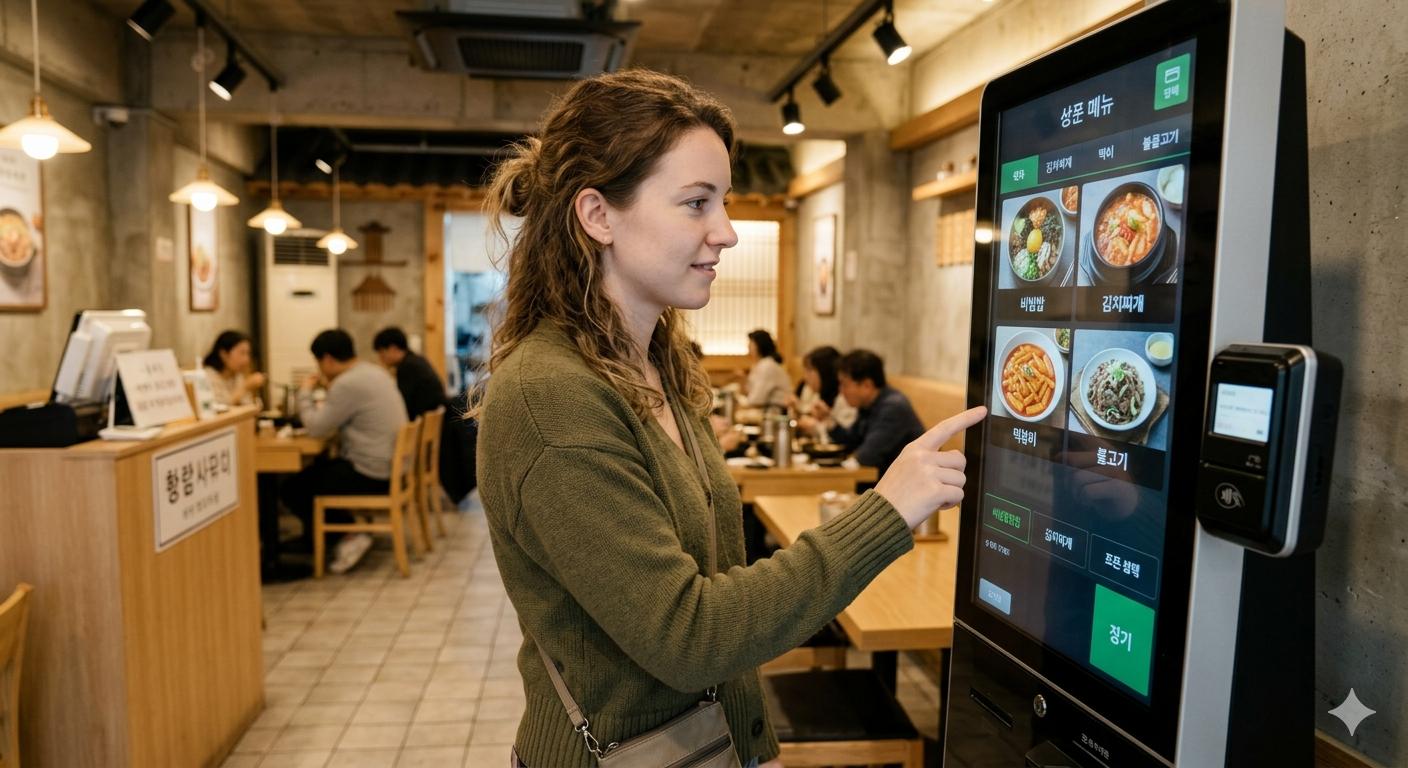
Walk into almost any fast food restaurant, casual dining spot, or cafe chain in Korea and the first thing you see is a row of kiosks. You order, you pay, you wait for your number. No line at the counter, no miscommunication, no waiting for someone to take your order. For foreign visitors who do not speak Korean, this is actually a relief. The kiosk does not care what language you think in. Most of them have an English option. You just tap what you want.
Convenience Stores Run Themselves at Night
Many convenience stores in Korea, particularly in residential areas and smaller neighborhoods, operate with zero staff during late night hours. You scan your ID at the door, walk in, pick up what you need, and pay at a self-checkout machine. The whole visit takes two minutes. There is nobody to ask for help and nobody you need to interact with. It just works.
You Can Eat Alone Without Any Awkwardness
Korea has a growing number of fully unmanned restaurants where you order at a kiosk, pick up your food from a window or a small hatch, and eat without interacting with anyone at all. Some of these are designed specifically for solo diners. Individual booths, no shared tables, food delivered through a slot in the wall. The experience is completely normal here. Nobody finds it strange.
Hotels and Guesthouses Have Figured This Out Too
Self check-in kiosks at hotels are now standard across Korea, from budget guesthouses to mid-range business hotels. You enter your reservation number, verify your ID, and get your room key without ever speaking to anyone at the front desk. Some places do not have a front desk at all. The entire check-in process happens on a screen in the lobby.
Why Korea Moved This Fast
A few things pushed Korea toward unmanned systems faster than most countries. Labor costs rose significantly over the past decade, making automation a practical choice for small business owners. Korean consumers also adapted quickly. The preference for fast, frictionless transactions fits naturally into a culture that already values speed and efficiency. PPALLI PPALLI (빨리빨리), the Korean mindset of getting things done fast, found its ideal infrastructure in the self-service kiosk.
It Takes About One Day to Get Used To
Most foreign visitors find the unmanned systems slightly disorienting at first. The kiosk is in Korean, the interface is unfamiliar, and there is no staff to ask for help. But the adjustment period is short. By the second or third kiosk, it clicks. After that, the speed and simplicity start to feel like the obvious way to do things. A lot of visitors leave Korea quietly wishing their home country had caught up.