
Why Koreans Queue for Salt Bread at 9AM
In This Article
Why Koreans Queue for Salt Bread at 9AM
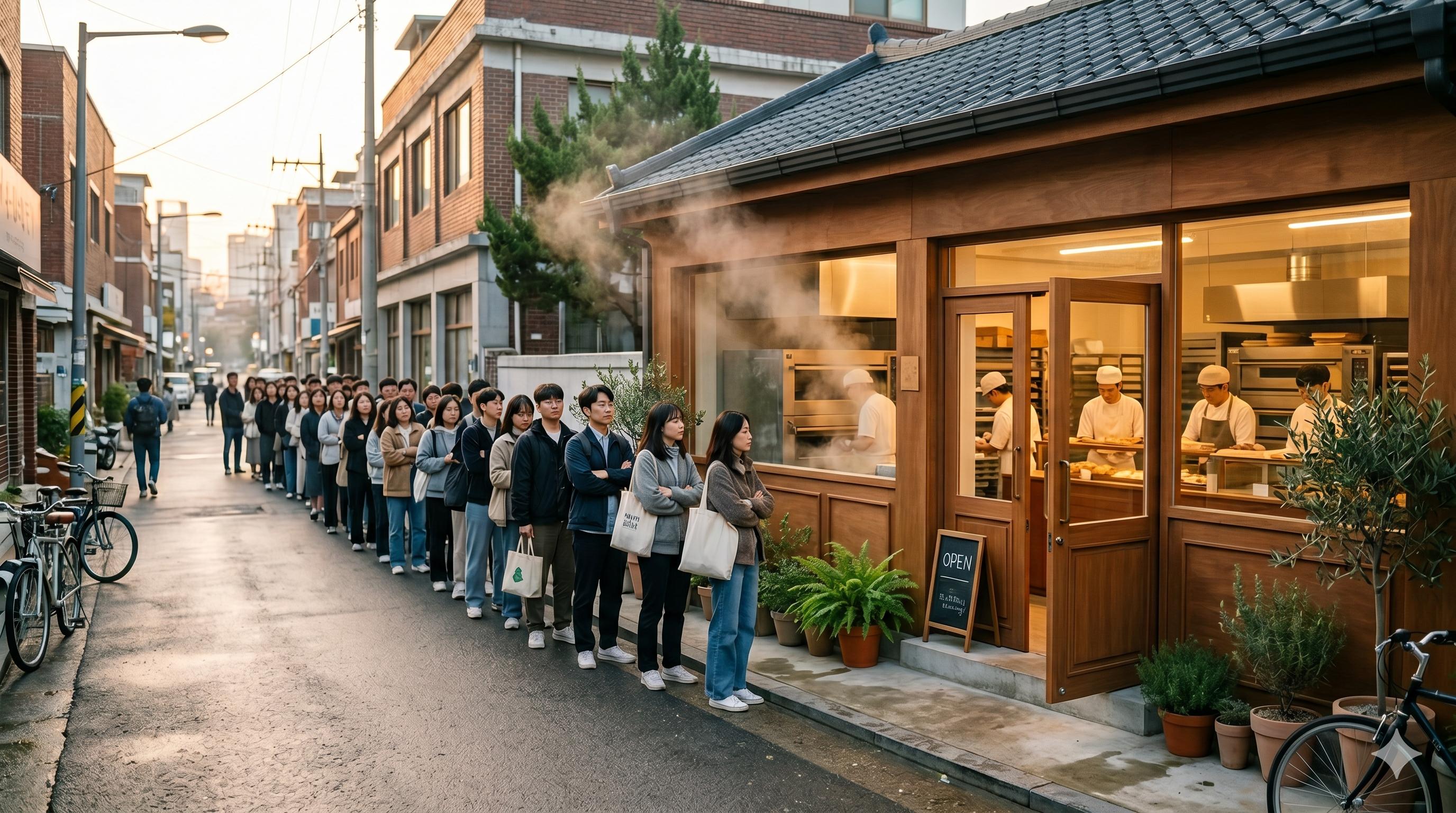
At select bakeries in Seoul’s Seongsu and Ikseon-dong districts, queues form before 9AM opening. The item drawing the lines is salt bread — a butter-and-salt roll that has become a signature menu item across multiple Seoul cafés and bakeries. The phenomenon has reached international visibility, with venues such as London Bagel Museum appearing in foreign travel guides and social media itineraries for Seoul.
The Bakery Lines Form Before Opening
Search terms including “Seongsu salt bread” and “Korean bakery queue” are circulating in international travel communities. TikTok and Instagram have seen consistent uploads of wait documentation — photographs of the line, unboxings, and first-bite footage. At high-demand locations, sell-outs within the first hour of opening have been reported across multiple visitor accounts. Precise sales figures and daily visitor counts are not confirmed.
How Salt Bread Became a Seoul Trend
Salt bread traces its origins to Japanese bakery culture, where it is known as shio-pan (塩パン). The format gained popularity in Japan in the mid-2010s. In Korea, the base recipe was adapted — adjustments in butter content, texture, and presentation produced a version distinct from its Japanese predecessor. Seongsu and Ikseon-dong, both dense with concept cafés and pop-up spaces, function as early-adoption zones where food trends accelerate quickly.
When Waiting Becomes Part of the Experience
Visitor accounts consistently frame the wait as part of the experience rather than an obstacle to it. The pattern mirrors behavior seen in Korean limited-edition goods and pop-up culture, where scarcity and documentation carry social value independent of the product. Foreign visitors have described queuing as “a Seoul thing to do,” treating it as an activity rather than an inconvenience. The wait, in this framing, becomes the content.
TikTok Turned the Queue Into Content
Much of the international visibility surrounding Seoul’s salt bread culture now comes through short-form video platforms. TikTok uploads documenting the queue, the bakery interiors, and the first bite experience have accumulated significant engagement from overseas viewers planning trips to Korea. The visual format of warm bread trays, compact Seoul bakery interiors, and visible waiting lines translates particularly well into recommendation-driven algorithms.
In many cases, the line itself appears as frequently in content as the bread. Videos often begin before customers even enter the bakery, emphasizing anticipation and scarcity as part of the viewing experience. The documentation of waiting has effectively become inseparable from the product being consumed.
What Seoul’s Bakery Wait Culture Suggests
Whether salt bread expands further into franchise cafés or convenience store distribution remains unconfirmed. Previous Korean food trends — including croissants and maritozzo — followed similar cycles from concept café popularity to mass-market availability. What appears more durable is the queuing format itself. Seoul’s café wait culture has evolved into a recognizable feature within international travel content about the city, where documenting the wait is treated as part of participating in Seoul’s food culture.