


Korean Seasonal Customs and the Wisdom of the 24 Solar Terms
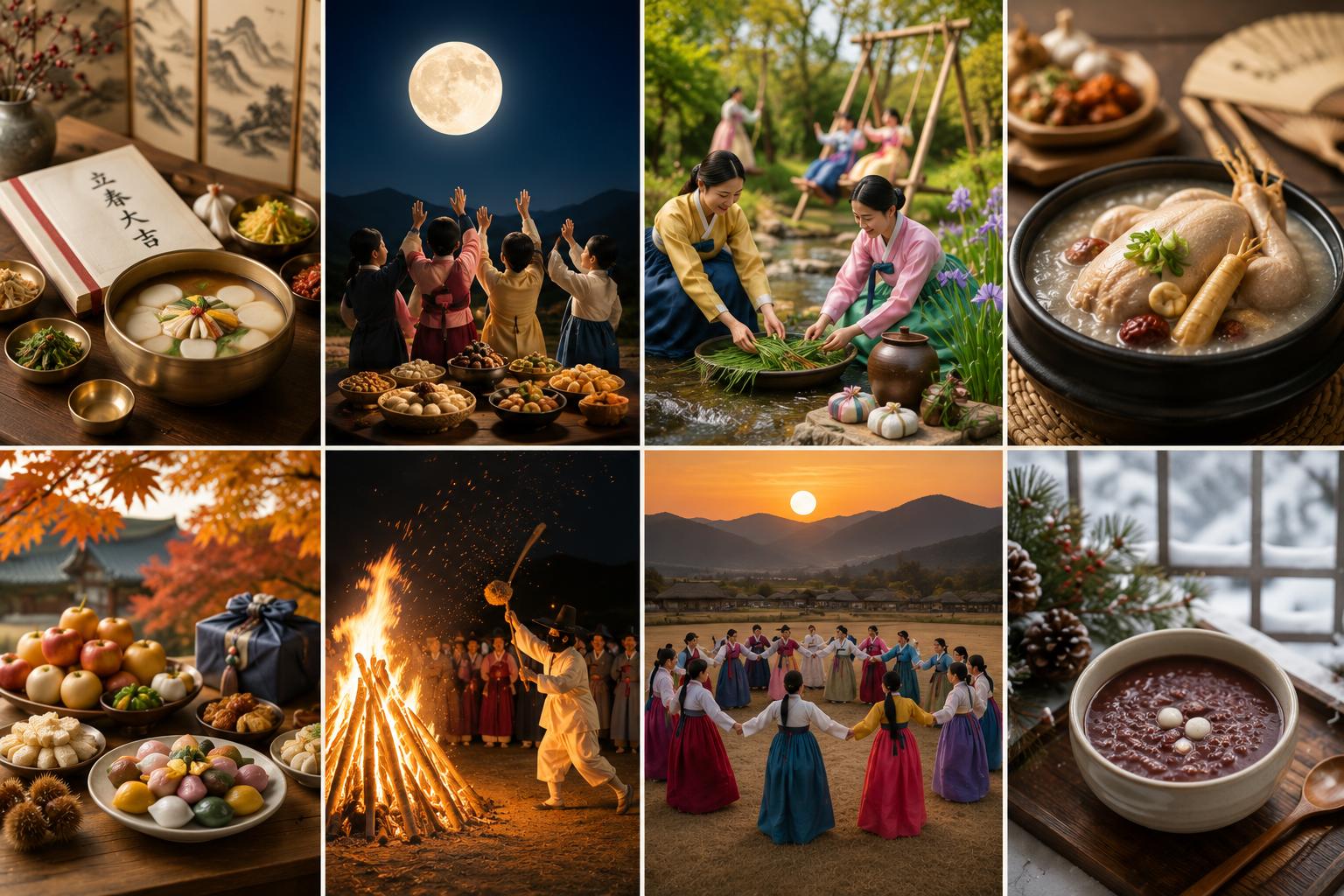
Korea's seasonal customs are cultural agreements that have long read the changes of nature and strengthened community harmony. Here is an introduction to the wisdom embedded in Korean seasonal customs, developed based on the 24 solar terms.
In This Article
Seasonal Wisdom
For a long time, Korean life has been guided by the "24 solar terms," which follow the sun's movement, and the lunar calendar. Terms such as Ipchun (Beginning of Spring), Gyeongchip (Awakening from Hibernation), Haji (Summer Solstice), and Chubu (Autumnal Equinox) were crucial standards for determining farming schedules and daily rhythms. Our ancestors keenly observed seasonal changes, learned to enjoy customs suited to the time, and discovered ways to coexist harmoniously with nature while sharing food.
Spring: The Beginning of Life
- Seollal (Lunar Jan 1st): The beginning of the year. It has been a tradition to hold ancestral rites, eat Tteokguk (rice cake soup), and celebrate the start of the new year.
- Jeongwol Daeboreum (Lunar Jan 15th): The first full moon. People pray for the village's well-being, eat Ogokbap (five-grain rice), and crack nuts called "bureom" to wish for good health.
Summer: Embracing Nature's Energy
- Dano (Lunar May 5th): Welcoming early summer. People washed their hair in water infused with sweet flag, enjoyed swings and wrestling, and prayed for health and abundance.
- Boknal (Sambok): The hottest days of the year. People used the wisdom of eating invigorating foods like Samgyetang (ginseng chicken soup) to restore energy.
Autumn: Harvest and Sharing
- Chuseok (Lunar Aug 15th): Along with Seollal, it is one of Korea’s representative holidays. People harvest the year's crops, express gratitude to their ancestors, make Songpyeon (rice cakes), and perform the Ganggangsullae dance to confirm community ties. Many Koreans also travel to their hometowns to spend time with family during this holiday.
Winter: Emptiness and Preparation
- Dongji (Around Dec 22nd): The longest night of the year. Traditionally, it was believed that red beans ward off bad luck, so people ate red bean porridge to wish for health in the coming year.
Living in Harmony with Nature
Seasonal customs are not merely past events; they are a unique Korean lifestyle that respects the cycle of nature and shares affection with neighbors. While many aspects have changed in modern times, the life philosophy of reading the flow of seasons and striving to live in harmony with nature remains a valuable asset of our culture today.