


The Microbial Symphony: The Science of Kimchi Fermentation
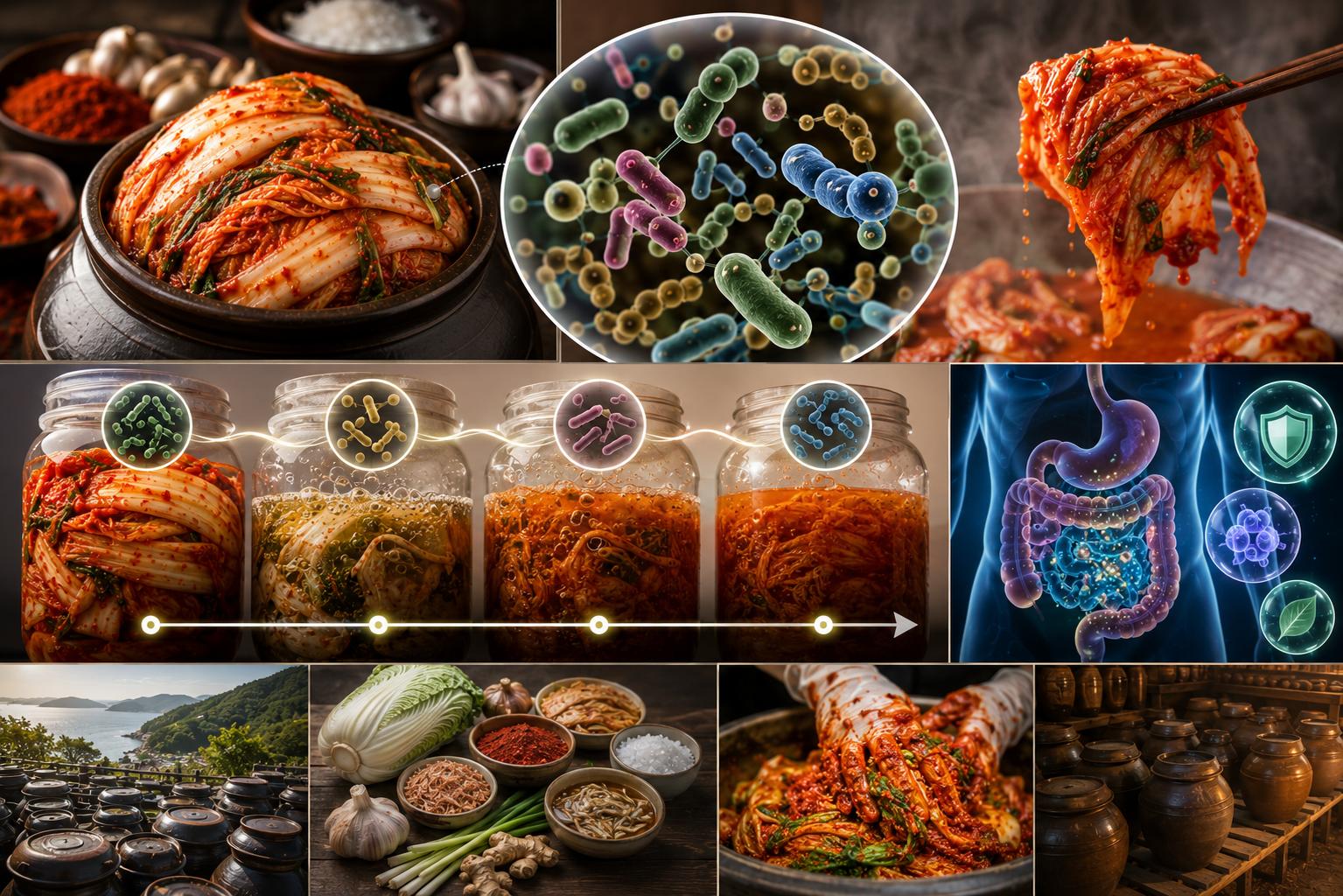
Where does the refreshing, deep flavor of kimchi come from? We uncover the incredible science of microorganisms and the mystery of fermentation hidden in the kimchi-making process.
In This Article
The Protagonist of Kimchi Flavor: Lactic Acid Bacteria (LAB)
Kimchi is more than just fermented vegetables. The moment Napa cabbage, chili powder, and salted seafood (jeotgal) meet, diverse invisible microorganisms begin to move actively, playing a symphony of flavors. The essence of kimchi fermentation lies in the sequential and dynamic activity of Lactic Acid Bacteria (LAB).
Unlike regular yogurt, which uses a limited number of selected strains, kimchi fermentation is driven by a complex microbial community derived from nature that changes and evolves over time.
Microbial Shifts During Fermentation
- Early Stage: The Refreshing "Leuconostoc"
Immediately after making kimchi, species of the genus Leuconostoc are most active. They produce not only lactic acid but also carbon dioxide and mannitol, which are the secrets behind kimchi's signature refreshing, carbonated zing and crisp flavor. - Mid-to-Late Stage: The Deep Flavor of "Weissella" and "Lactobacillus"
As time passes and the acidity of the kimchi increases, acid-tolerant species like Weissella and Lactobacillus become dominant. These bacteria produce large amounts of organic acids, controlling the sourness and adding depth to complete a complex umami profile.
The Aesthetics of Health-Conscious Fermentation
The activity of kimchi's lactic acid bacteria does not end with creating flavor. Recent research suggests that metabolites generated during the kimchi fermentation process may aid antioxidant activity and contribute to supporting gut health and the immune system. Kimchi is recognized globally as a representative fermented food because it embodies the "wisdom of handling microorganisms" accumulated by our ancestors over thousands of years.
Kimchi as Personal Art
The reason kimchi tastes different in every home and region, even with similar ingredients, is that the microbial ecosystem changes based on the type of salted seafood used, salinity, and storage temperature. From this perspective, kimchi can be considered the "most personal art," created through the harmony of a family's unique ingredients, environment, and their specific microbial ecosystem.