


The Deep, Rich Flavor of Hwangseogeojeot(황석어젓): A Traditional Korean Fermented Seafood
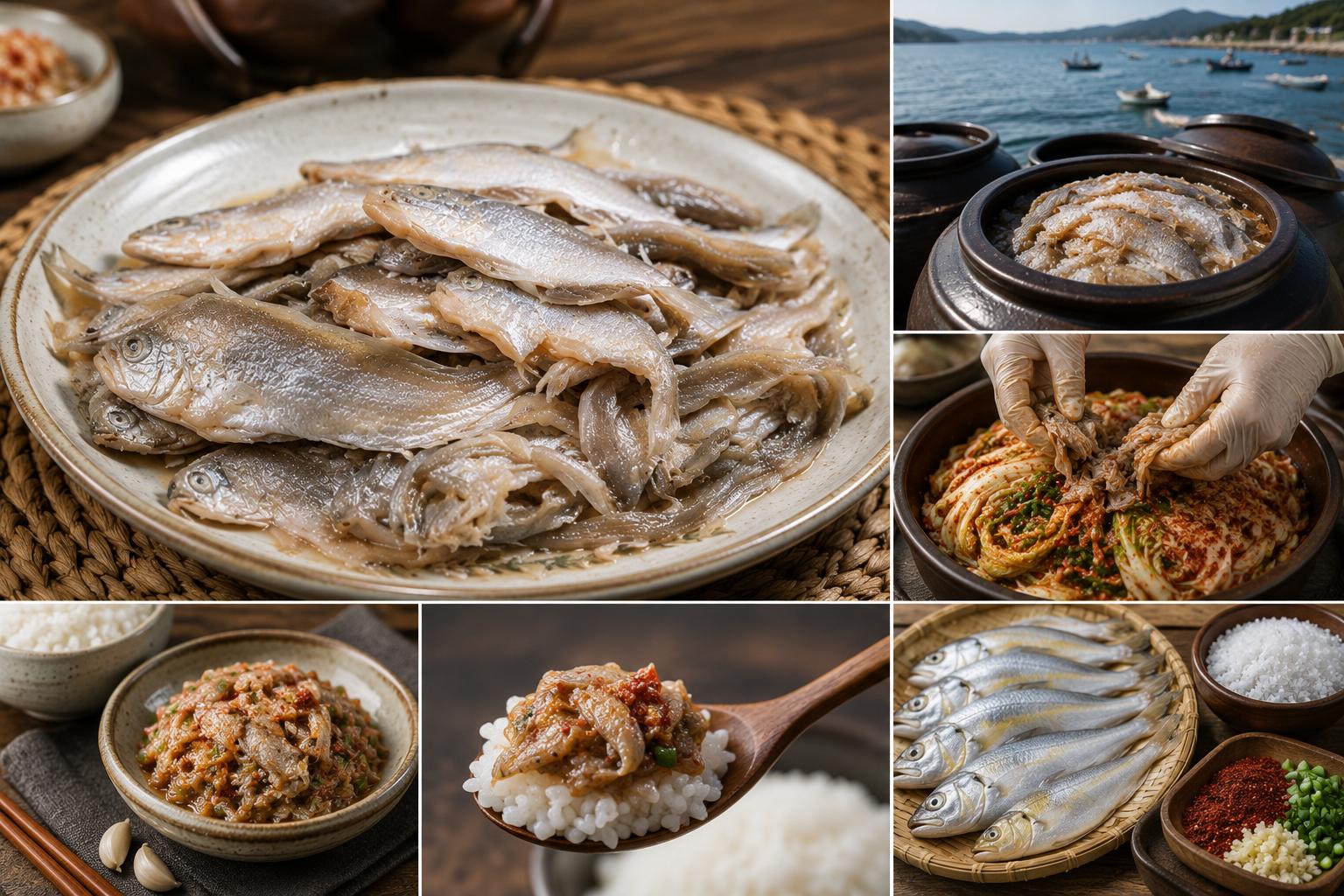
Hwangseogeojeot, a traditional fermented food that captures the richness of Korea's west coast. We introduce the charm of this salted fish, a hidden master of deep and savory flavor on the Korean table.
In This Article
What Is Hwangseogeojeot?
In Korean food culture, Jeotgal (salted seafood) is a product of wisdom that preserves natural ingredients and expands their flavor. Among these, Hwangseogeojeot is a fermented food that has long been cherished, particularly in the west coast region, and is well-known for its unique, deep, and rich savory flavor.
Hwangseogeojeot is a traditional Korean salted seafood made by fermenting a fish commonly called "Hwangseogeo" in salt. Historically abundant in the waters of Korea's west coast, the fish is carefully cleaned and aged with sun-dried salt for an extended period. During the fermentation process, Hwangseogeojeot develops a dense and complex flavor profile.
Why Is It Special?
- Unique Flavor: During fermentation, enzymes from the internal tissues and microorganisms break down proteins to produce amino acids and peptides. These components combine to complete the deep and rich flavor characteristic of Hwangseogeojeot.
- Supporting Role in Traditional Kimchi: In many regions, particularly those centered around the west coast, Hwangseogeojeot is used as a vital seasoning ingredient when making kimchi, playing a major role in achieving the kimchi's signature deep and complex taste.
Culinary Uses
- Classic Side Dish: When well-aged Hwangseogeojeot is seasoned with chopped green onions, garlic, chili powder, and sesame oil, it becomes an excellent side dish that stimulates the appetite.
- Culinary Flavor Enhancer: In some regional cuisines, it is used in small amounts like a natural seasoning to lift the overall depth of a dish.
The Wisdom of Coastal Communities
Hwangseogeojeot has been an essential preserved food and flavoring ingredient on the dining tables of the west coast region. It demonstrates the wisdom of Korean fishing communities, who transformed fish caught in the west sea into a year-round delicacy through meticulous fermentation. This process symbolizes the Korean fermentation culture that thrives in harmony with nature.