


Why Old Korean Villages Built Sacred Trees at Their Center
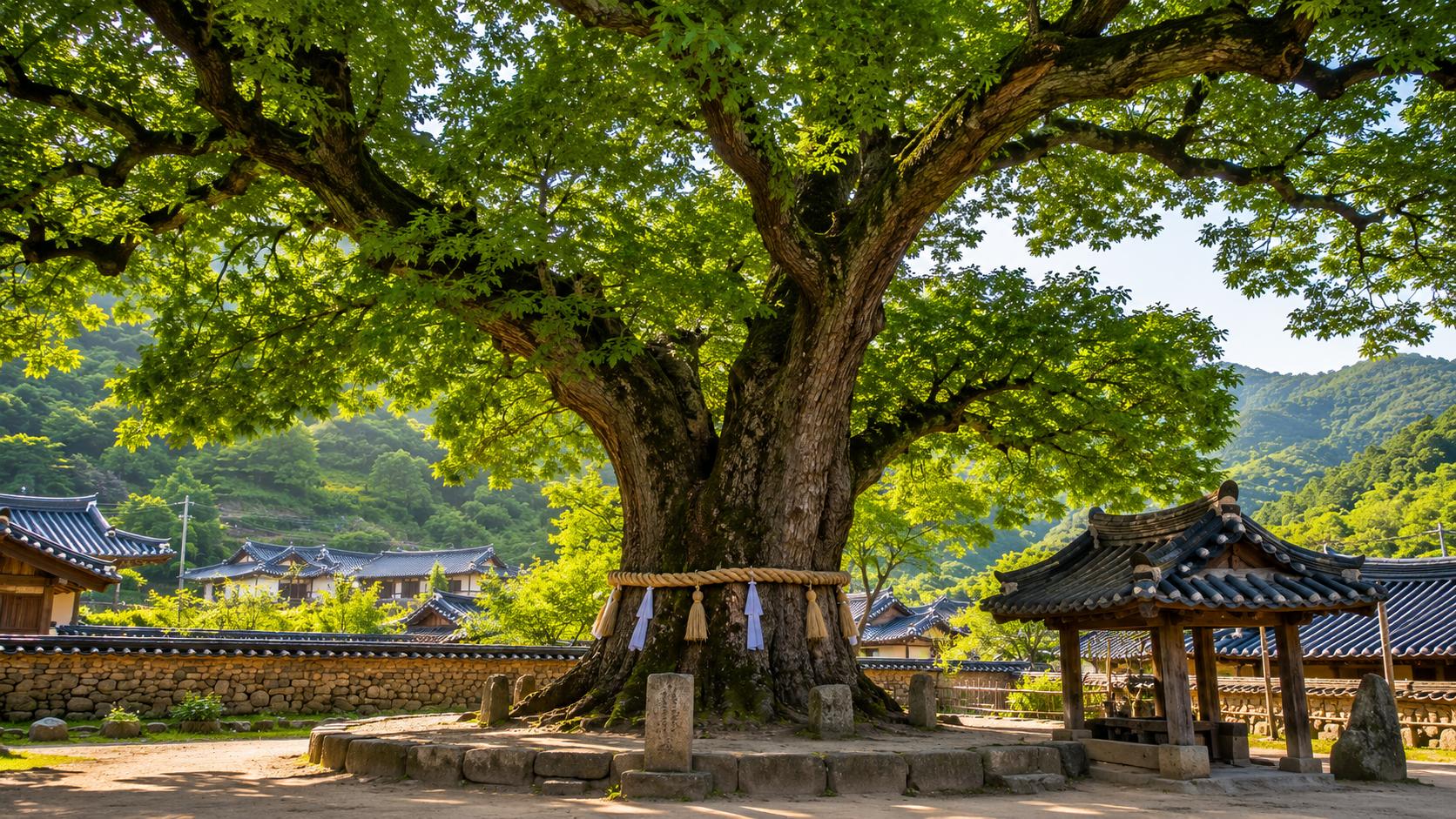
Long before modern cities, Korean villages often centered around a single sacred tree believed to protect the community. Known as the Dangsan Tree, it stood as a spiritual guardian where villagers gathered for rituals, prayers, and collective identity.
In This Article
What Is a Dangsan Tree?
In traditional Korean villages, people often designated one large tree as a sacred protector known as the “Dangsan Tree.” Usually an old zelkova, pine, or hackberry tree, it was believed to house spiritual forces that guarded the village. Rather than being valued simply for nature, the tree represented a living connection between the human world and unseen spiritual powers.
Village Guardian Spirits
Korean folk religion developed long before organized religions became widespread. Villagers believed every mountain, river, and forest possessed its own spirit. The Dangsan Tree was thought to be the dwelling place of a protective deity responsible for keeping disasters away, ensuring good harvests, and maintaining peace within the community. This belief system reflects Korea’s deep-rooted animistic traditions.
Dangsan Rituals
Every year, villagers gathered beneath the sacred tree to perform “Dangsan-je,” a communal ritual dedicated to the guardian spirit. Offerings such as rice wine, fruit, and food were prepared while prayers were made for health, prosperity, and protection. These ceremonies often involved music, drumming, and traditional performances, turning spiritual practice into a major annual village event.
The Center of Community Life
The Dangsan Tree served more than a religious purpose. Before community halls existed, it functioned as the heart of village life. Elders held meetings under its shade, children played nearby, and travelers rested there during long journeys. In many ways, it acted as a natural public square where social bonds were continuously reinforced.
Why They Survived for Centuries
Because these trees were considered sacred, villagers avoided damaging them. Cutting branches or harming the tree was believed to bring misfortune. This collective respect unintentionally preserved many trees for hundreds of years. Some surviving Dangsan Trees in Korea today are estimated to be over 500 years old, standing as living witnesses to generations of local history.
Their Meaning Today
Although many Koreans no longer practice traditional village rituals, the Dangsan Tree remains a powerful cultural symbol. It represents an older Korean worldview where humans lived in respectful balance with nature and community came before individualism. For modern visitors exploring rural Korea, these ancient trees reveal a hidden layer of Korean heritage that goes far beyond popular K-pop or contemporary culture.