


Why Winter in Korea Means Eating Endless Tangerines
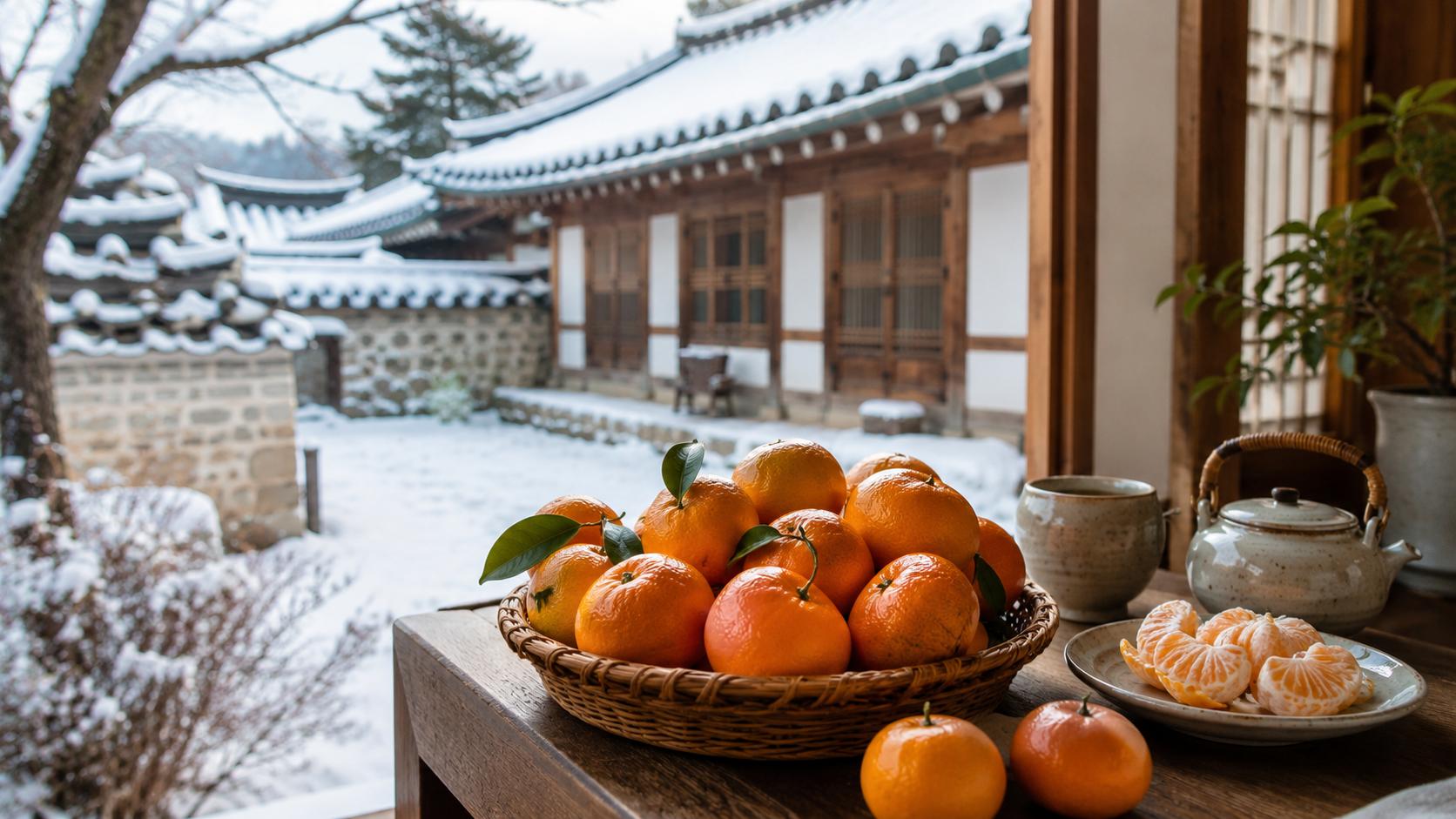
Every winter in Korea, one fruit quietly takes over homes, offices, and family gatherings. Tangerines become more than just a snack — they represent comfort, warmth, and one of Korea’s most familiar seasonal rituals during the coldest months of the year.
In This Article
Winter Means Tangerine Season
In many countries, winter fruits vary depending on region and tradition. But in Korea, winter has long been closely associated with one fruit above all others: tangerines. As temperatures begin to drop, boxes of bright orange tangerines suddenly appear everywhere, from supermarkets and office desks to living rooms across the country. For many Koreans, winter simply feels incomplete without them.
The Connection to Jeju Island
Korea’s tangerine culture is deeply connected to Jeju Island, the country’s southern volcanic island famous for its mild climate. For decades, Jeju has been Korea’s largest producer of citrus fruits, making winter tangerines one of the island’s most iconic agricultural products. Because of this, the fruit became strongly tied to seasonal life throughout the country.
Why Every Korean Home Has Them
During winter, Korean families rarely buy tangerines one by one. Instead, they often purchase large boxes containing dozens of fruits at once. It is common to see families placing entire boxes in the living room, making them easily accessible throughout the day. Unlike occasional snacks, tangerines become something people casually eat while studying, watching television, or simply relaxing at home.
The Ultimate Winter Comfort Snack
Part of the reason tangerines became a winter staple is simple convenience. They require no cutting, no preparation, and no dishes afterward. The act of peeling tangerines while sitting under warm blankets has quietly become one of Korea’s most familiar winter habits. For many people, the smell of freshly peeled citrus immediately triggers memories of childhood and family gatherings.
A Fruit Made for Sharing
Tangerines are also deeply social in Korean culture. Teachers bring them to schools, coworkers leave them on office tables, and relatives often share boxes with neighbors during winter visits. Because they are inexpensive and easy to distribute, they naturally became a fruit associated with generosity and togetherness rather than individual consumption.
A Seasonal Tradition That Never Changed
Food trends constantly evolve, but Korea’s winter relationship with tangerines remains remarkably consistent. Even younger generations raised in the age of delivery apps and imported fruits continue this quiet seasonal ritual. More than nutrition, tangerines represent warmth, nostalgia, and the simple comforts that define everyday winter life in Korea.