


Inside Seoul’s Hidden Industrial Art District
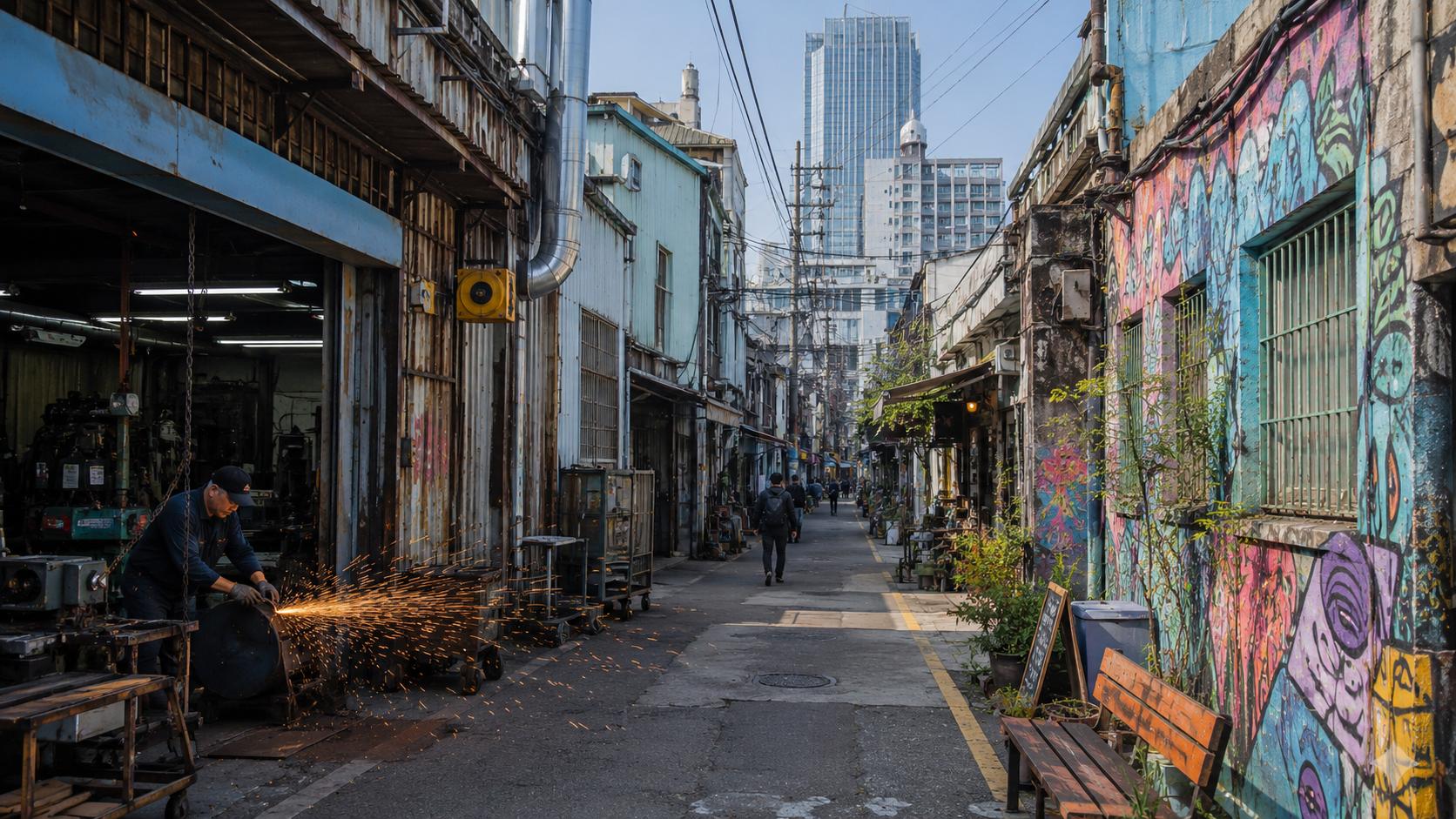
Hidden in western Seoul, Mullae-dong is one of Korea’s strangest urban transformations. What was once a noisy industrial district filled with steel factories and machine workshops has gradually become an unexpected home for artists, murals, galleries, and creative studios, creating one of the most unusual neighborhoods in modern Korea.
In This Article
What Is Mullae-dong?
Mullae-dong is a neighborhood located in Seoul’s Yeongdeungpo district, but unlike the city’s polished shopping districts and tourist attractions, Mullae feels entirely different. Rusted steel factories, welding workshops, graffiti-covered walls, art studios, and hidden cafes all exist within a few narrow alleyways. For many visitors, it feels like stepping into two completely different worlds at once.
An Industrial District Built on Steel
During Korea’s rapid industrialization in the 1970s and 1980s, Mullae became one of Seoul’s major metalworking districts. Hundreds of small factories specialized in steel cutting, machine parts manufacturing, welding, and industrial equipment production. The entire neighborhood developed around heavy industry and played an important role in supporting Korea’s economic growth during its manufacturing boom.
How Artists Moved In
As large-scale manufacturing gradually moved away from central Seoul, many empty warehouses and abandoned industrial buildings were left behind. Around the early 2000s, independent artists searching for cheap studio space began moving into these unused spaces. Slowly, galleries, workshops, murals, and performance spaces started appearing between the old factories, giving birth to what is now known as Mullae Art Village.
Walking Through Seoul’s Most Unusual Streets
The most fascinating part of Mullae is the contrast visitors immediately notice. One building might contain workers cutting steel with industrial machines while the building next door displays contemporary art installations or hosts a small coffee shop filled with young creatives. Giant metal pipes line the streets, sparks fly from welding shops, and colorful street murals cover nearby walls, creating an atmosphere unlike anywhere else in Seoul.
Where Factories and Art Still Coexist
Unlike many urban redevelopment projects that completely replace older neighborhoods, Mullae remains unusual because both worlds continue to exist together. Older factory owners still operate businesses that have been running for decades, while younger artists and entrepreneurs continue reshaping the district’s identity. This coexistence creates a rare example of industrial heritage surviving alongside modern creative culture rather than being erased by redevelopment.
A Symbol of Modern Urban Change
Today, Mullae-dong represents something larger than just an art neighborhood. It reflects how Seoul continues reinventing itself while preserving fragments of its industrial past. While tourists often visit famous places like Myeongdong or Gangnam, Mullae offers a completely different perspective on modern Korea — one where steel factories, underground art culture, and urban transformation collide in ways few international visitors ever expect to see.